
So, you’ve probably noticed the pink elephant in the room.
It’s just hanging there, eating popcorn and watching everyone else’s reactions to their own drama.
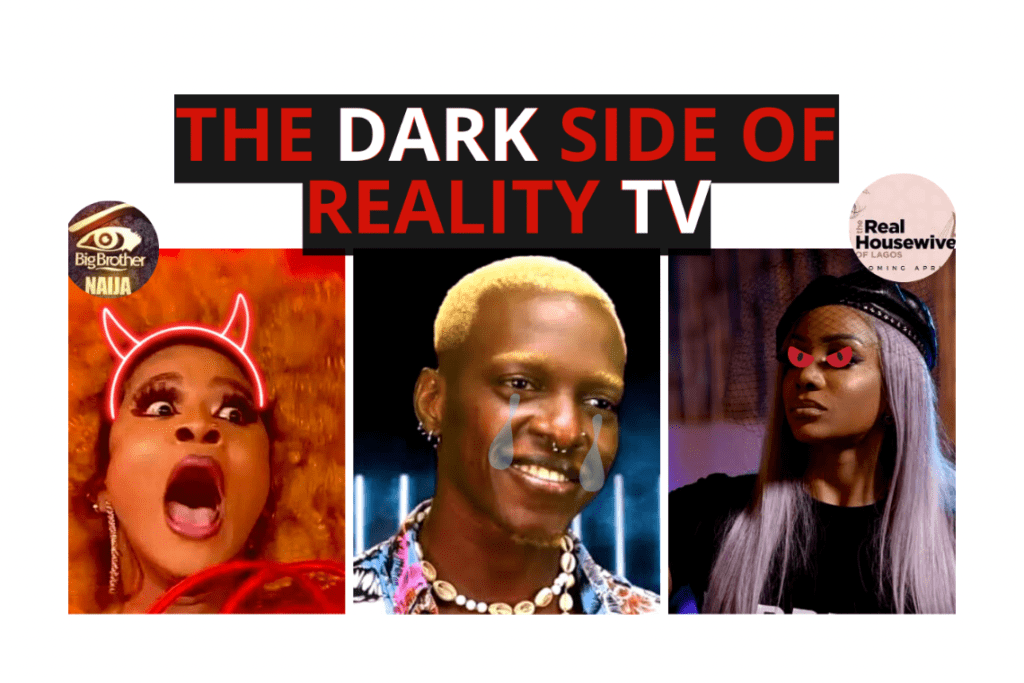
And if you haven’t noticed, they are everywhere. From your favorite shows like Big Brother, Real Housewives of Lagos, and RHOL, it seems like we can’t turn on the TV without seeing one of these shows.
We’re going to do something a little different today. We’re going to talk about mental health and reality TV.
Nigeria’s reality TV show obsession
I know this might sound a little out of left field for you, but hear me out.
In Nigeria, we’re obsessed with reality TV shows. They’re basically our religion now, and people from all over the country watch them together in homes or bars. Well, one of those shows is RHOL and BBNAIJA—and these shows have been under fire for years for how they affect mental health.
But what does it mean? What’s happening when we watch these shows? And what can we do about it?
Are these shows really good for us?
The short answer is: No
This should not be misinterpreted as a diss, remember I said I watch most of these shows
You’ve probably heard of Big Brother Naija and Real Housewives of Lagos and Abuja to name a few which have become really popular .
But have you ever wondered what these reality TV shows are doing to the mental health of their viewers?
What is reality tv?
Reality TV describes a show that takes ordinary people and places them in specific situations to see how they react. It is portrayed as a harmless form of entertainment, but the harm (which is done so subtly) is actually quite powerful.
The concept of the show is usually to put hidden cameras in unexpected places and position people in baffling situations, watching their reactions.
The allure of watching people , supposedly unscripted with no actors can be quite intoxicating. In these shows, contestants/participants are laughed at, rejected, voted off, made fun of and so on.
We have seen BBNaija housemates cry( saga), get violent (uti) and even disqualified
When Kayvee of BBNaija left the house on medical grounds early in the season, it was a lost opportunity to speak directly to the challenges of many of its viewers. Just five days into his stay in early August, Kayvee’s management team described his exit as being motivated by a mental health challenge.
Who looks after the mental health of contestants when they stay locked up for weeks with people they probably have never met?
The thing is, when you watch shows like RHOL and BBNAIJA, you’re not just watching them—you’re participating in them. You’re getting pleasure from people’s struggles and traumas. And that can have a serious impact on your mental health.
But how real is this reality anyway?
Recently,the producers of some of these shows have confirmed that they’re loosely scripted. Things are planted. Things are salted into the environment to make them seem more shocking,”.
What we’re seeing isn’t actually real. It’s dramatized reality where contestants are provoked into the most dramatic reactions, and storylines are set up well in advance.
I’m sure you can think of some of the dramatizations you have seen in a few of these shows. An example that comes to mind is a popular cooking show abroad where the chef constantly yells and swears at the contestants.
The final programme is designed to create more drama and subsequently attract more viewers.
The interesting part is these shows aren’t going anywhere,” The programming is lucrative and cheap to produce.- despite calls for the show to not air this year due to the elections, there’s big brother currently holding as we speak.
What are some of the common themes in reality TV?
Physical Beauty And Sex Appeal: Many reality shows depict women idealizing beauty and thinness, giving the impression that a woman’s value is based on her appearance, and that popularity is derived from beauty. Many cast members of other reality shows, such as The Real Housewives franchise, are very open about their numerous plastic surgeries.
Materialism And Excessive Partying:
Other common values perpetuated by reality TV include materialism, hard-partying and “celebrity” lifestyle without regard for consequences.
They take extravagant trips, wear designer clothes, spend a lot of money on alcohol-fueled parties, and are rarely seen working regular jobs.
Contestants often engage in risky sexual behavior, physical altercations, and despite their obvious poor behavior, they are celebrated
Aggression And Bullying
Reality TV typically reveals inappropriate behavior within peer groups, often promoting interpersonal drama, aggression and bullying.
For example, women in The Real Housewives franchise gossip, back-stab and behave aggressively, condescending and catty toward one another.
This behavior gives girls the idea that gossiping is a normal part of a female relationship, that it’s in girls’ natures to be devisive and competitive with one another, and that being mean earns respect and is often necessary to get what you want.
Lack Of Focus On The Importance Of Intelligence And Real World Success
While reality TV seems to place emphasis on sex appeal, materialism, hard-partying and relational aggression, it does not emphasize the fact that many women on these shows are highly intelligent and successful in their real lives.
Online trolling
Spending more time on social media — whether you’re obsessively monitoring your mentions or defending yourself against BBNaija trolls — has been linked to a higher chance of developing depression( add social media tweets about tacha)
Reality tv mental health effects?
The first thing is that it could make you feel bad about yourself and life in general.
Sure, we all feel down sometimes, but when you’re watching the show and seeing people who seem to be having so much fun while you’re battling some life challenge(especially now that life is tough for a lot of Persons living in Nigeria ), it can take the wind out of your sails.
In fact, a recent study found that people who watch reality TV are more likely to suffer from depression than those who don’t watch it at all!
And then there’s how it affects our relationships with other people—especially our romantic partners!.
I know that watching reality TV can be fun and entertaining, but isn’t it also kind of sad that so many people are watching and taking pleasure in other people’s suffering?
Taking care of your mental health
- So what can you do about it? Well first off, you can ask yourself if you really need to be watching these shows (and if the answer is “no,” then maybe you should take some time off).
- Second off, you might want to consider talking with someone who has experience managing mental health conditions(like your doctor or therapist).
Particularly important is that Next time you watch any reality TV show, try to keep in mind that these are just fictional entities being played out by real people (who are probably not as happy as they seem). And remember that everyone is going through some kind of struggle right now. Their lives are not perfect and scenarios created may not be real
- Open up. Talk about what you see on reality TV shows with your friends and family members who watch them, and let them know what they’re missing out on because they’re not looking at reality the right way!
- Fourthly … well, maybe just don’t watch reality TV anymore?
Final thoughts?
The idea of watching reality TV is fun, but it’s also one of the worst things you can do for your mental health.
I hope you find this video informative!