

Breastfeeding is often described as natural and beautiful. But many mothers quietly go through severe pain while trying to feed their babies. Some cry through feeds. Some begin to fear their baby’s cries because they know the pain is coming again. Others feel guilty for struggling.
If this sounds familiar, you are not alone.
Painful breastfeeding is very common, especially in the early days after delivery. But one important thing every mother should know is this: breastfeeding pain is not something you should simply endure forever. In many cases, there is a clear reason behind the pain, and there is usually a solution.
In this article, we will explain the most common causes of painful breastfeeding, how to fix them, when to seek medical help, and how to protect your emotional well-being during this period.
Many women assume breastfeeding pain means they are failing or doing something wrong. That is not true.
During the first few days after delivery, mild tenderness may happen as your body adjusts to breastfeeding. However, severe pain, cracked nipples, bleeding, sharp pain, or swollen breasts are signs that something needs attention.
Painful breastfeeding can affect:
• Your confidence as a mother
• Your milk supply
• Your mental health
• Your bonding experience with your baby
• Your ability to continue breastfeeding
The good news is that many breastfeeding problems can improve with the right support.
[IMAGE GENERATION PROMPT]
Warm realistic illustration of a Nigerian mother breastfeeding her newborn in a softly lit bedroom. The mother looks tired but hopeful. Natural skin texture, cozy home environment, soft neutral tones, realistic maternal health photography style.
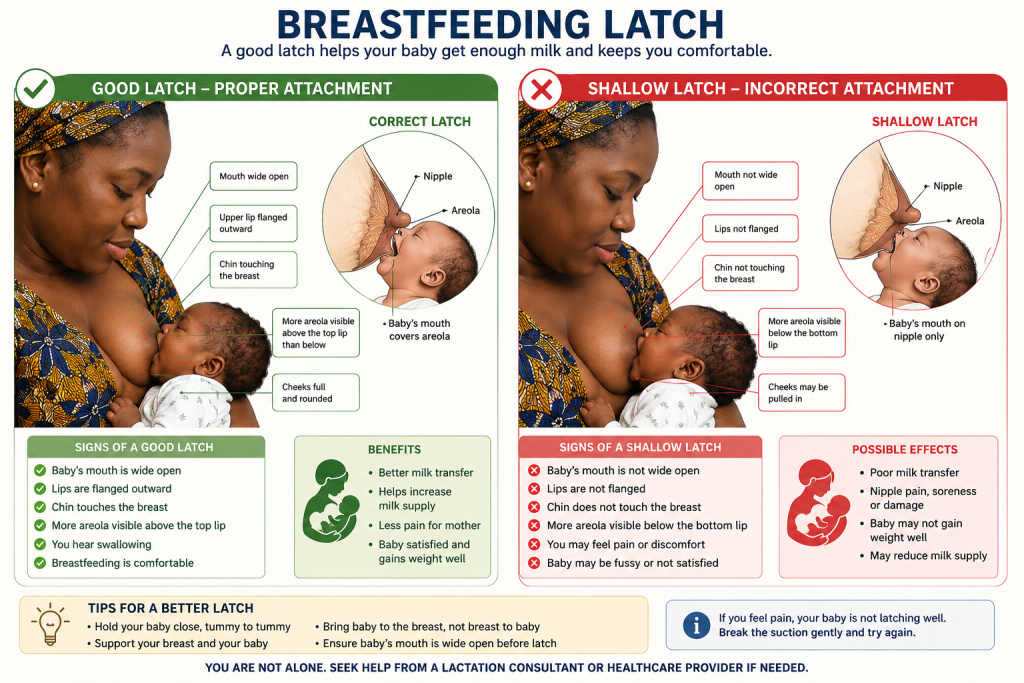
One of the biggest reasons breastfeeding hurts is poor latch.
A baby who is poorly attached to the breast may only suck on the nipple instead of taking enough of the areola into the mouth. This is called a shallow latch.
When this happens, the nipple rubs painfully against the hard part of the baby’s mouth. Over time, this can lead to:
• Cracked nipples
• Bleeding
• Burning pain
• Soreness during feeds
• Difficulty continuing breastfeeding
A good latch means your baby takes a large portion of the areola into the mouth, not just the nipple.
You may notice:
• Sharp pain during feeding
• Your nipples look flattened after feeding
• Clicking sounds while feeding
• Your baby seems frustrated during feeds
• Your breasts still feel full after feeding
• Cracked or bleeding nipples
• Your baby feeds for very long periods without satisfaction
If breastfeeding makes you tense up or dread feeding time, the latch should be checked.
Here are simple things that may help:
Position your baby tummy to tummy with you. The baby’s head, neck, and body should be aligned.
Do not rush. Allow your baby to open the mouth wide before bringing them close to the breast.
This helps the nipple reach the softer area inside the mouth instead of rubbing painfully against the hard palate.
Your baby should have a mouthful of breast tissue, not just the nipple.
A lactation consultant, experienced midwife, or doctor can observe a feed and help correct positioning.
Another major cause of breastfeeding pain is breast engorgement.
This happens when the breasts become overly full with milk. The breasts may feel:
• Heavy
• Tight
• Hard
• Warm
• Painful
Some mothers describe the breast as feeling like a stone.
Engorgement commonly happens when:
• Milk first comes in after delivery
• Feeding is delayed
• Baby is not emptying the breast well
• Breastfeeding sessions are skipped
• A mother suddenly stops breastfeeding
When milk stays trapped inside the breast, pressure builds up and causes swelling.
Severe engorgement can make breastfeeding more difficult because the breast becomes too firm for the baby to latch onto properly.
If not managed well, it may progress to mastitis, which is an infection of the breast.
Do not wait until your breasts become painfully full before feeding.
A warm towel before feeding may help milk flow more easily.
Massage the breast gently before and during feeds.
If the breast is too full, expressing a small amount of milk can soften the breast and help your baby latch better.
Many mothers stop feeding because of pain, but stopping completely can worsen engorgement.
Milk needs to keep moving.
Sometimes breastfeeding pain is due to infection.
Mastitis happens when the breast tissue becomes inflamed and infected. This condition can make a mother feel very sick.
You may notice:
• Breast redness
• Swelling
• Fever
• Body weakness
• Flu like symptoms
• Severe breast pain
• A hot painful area on the breast
Mastitis requires medical attention.
Many women mistakenly use herbs, oils, or home remedies that may worsen the problem.
Please see a doctor or healthcare provider early.
Treatment may include:
• Antibiotics
• Pain relief medication
• Continued breastfeeding
• Proper breast emptying
One important thing mothers should know is this: breast milk usually remains safe for the baby even during mastitis.
Do not stop breastfeeding unless your doctor specifically advises you to.
Breastfeeding pain may also be caused by a yeast infection known as thrush.
Thrush can affect the nipples and sometimes the baby’s mouth too.
Symptoms may include:
• Sharp shooting pain inside the breast
• Red shiny nipples
• Cracked nipples
• Burning sensation during feeds
• Persistent pain even after correcting latch
Your baby may also have white patches inside the mouth.
Thrush often requires antifungal medication prescribed by a healthcare professional.
Avoid self medication with herbs, oils, or harsh creams.
Both mother and baby may need treatment at the same time to prevent the infection from returning.
Some mothers notice that their nipples do not protrude outward like others. These are called flat nipples.
Flat nipples do not mean you cannot breastfeed.
Unfortunately, many women are wrongly told they are abnormal or unable to nurse their babies. That is false.
With support and proper techniques, many mothers with flat nipples breastfeed successfully.
Gentle stimulation before feeds may help the nipples protrude more.
Expressing a small amount of milk before feeding can make latching easier.
Some mothers benefit from nipple shields recommended by a healthcare provider.
A lactation consultant or experienced midwife can guide you through positioning and attachment techniques.
This is the part many people do not talk about enough.
Breastfeeding pain does not only affect the body. It affects emotions too.
When every feeding session becomes painful, some mothers begin to:
• Fear breastfeeding
• Feel anxious when the baby cries
• Feel guilty
• Feel ashamed
• Feel like bad mothers
• Consider stopping breastfeeding completely
These feelings are more common than many women realize.
A struggling mother is not a failing mother.
Painful breastfeeding can affect even mothers who are trying their best.
You deserve support, compassion, and proper care.
If breastfeeding is affecting your mental health, please speak to someone.
This could be:
• Your doctor
• A nurse
• A lactation consultant
• Your mother
• A trusted friend
• An experienced mother
Support matters.

Please seek medical attention if you have:
• Fever
• Severe breast swelling
• Pus discharge
• Bleeding nipples that do not improve
• Severe persistent pain
• Signs of infection
• Baby refusing feeds
• Poor baby weight gain
• Pain that continues despite correcting latch
Early treatment can prevent complications and make breastfeeding easier.
Many mothers silently endure pain because they believe suffering is normal.
Yes, breastfeeding may come with challenges. But ongoing severe pain is not something you should ignore.
Behind painful breastfeeding, there is often a reason. And most times, there is help available.
The earlier you seek support, the better the outcome for both you and your baby.
Mild tenderness during the first few days may happen, but severe pain, cracking, or bleeding is not normal.
In many cases, yes. Breastfeeding usually helps keep milk flowing and may improve recovery. Follow your doctor’s advice.
No. Many mothers with flat nipples successfully breastfeed with proper support and techniques.
Not necessarily. The cause of the pain should first be identified and treated.
Yes. Persistent pain can lead to stress, anxiety, guilt, and emotional exhaustion.
Painful breastfeeding is common, but suffering in silence should not be.
Whether the problem is poor latch, engorgement, mastitis, thrush, or flat nipples, support is available.
You are not weak because breastfeeding feels difficult.
You deserve care too.
With the right help, many mothers go on to have more comfortable and successful breastfeeding experiences.
If you are struggling, please reach out to a healthcare professional, lactation consultant, or trusted support person. Small changes can make a very big difference.

Your information will never be shared with any third party